Disaster Recovery
〰️
Disaster Recovery 〰️
Backup & Disaster Recovery
Data loss, system failures, cyber incidents, or human error can disrupt operations and put your business at risk. A reliable backup and disaster recovery strategy is essential to protect critical data and ensure business continuity.
Sandstone IT Services delivers structured Backup & Disaster Recovery solutions designed to safeguard your data across cloud and on-prem environments while enabling fast recovery when incidents occur.
Our approach focuses on automation, reliability, and regular testing, ensuring backups are not only taken — but can be restored when needed.
Backup & DR Sub-Services
Automated Backups
We implement automated backup systems to protect business data without manual intervention. Backups are scheduled, monitored, and verified to ensure critical systems and files are consistently protected.
✔ Scheduled backups
✔ Reduced human error
✔ Centralized monitoring
Why Backup & DR Matters
✔ Protection against data loss and ransomware
✔ Reduced downtime during incidents
✔ Business continuity and resilience
✔ Compliance and audit readiness
Disaster Recovery Planning
We help businesses prepare for system outages, cyber incidents, or data loss by developing clear disaster recovery plans aligned with business priorities.
✔ Recovery objectives defined
✔ Critical systems identified
✔ Practical recovery procedures
Cloud & On-Prem Backup Solutions
We design backup solutions that cover cloud, on-prem, or hybrid environments, ensuring data is protected regardless of where it resides.
✔ Cloud-based backups
✔ On-prem server backups
✔ Hybrid backup strategies
Backup Testing & Reporting
Backups are only valuable if they work. We perform regular backup testing and provide reporting to confirm data integrity and recovery readiness.
✔ Restore testing
✔ Backup success reporting
✔ Risk visibility
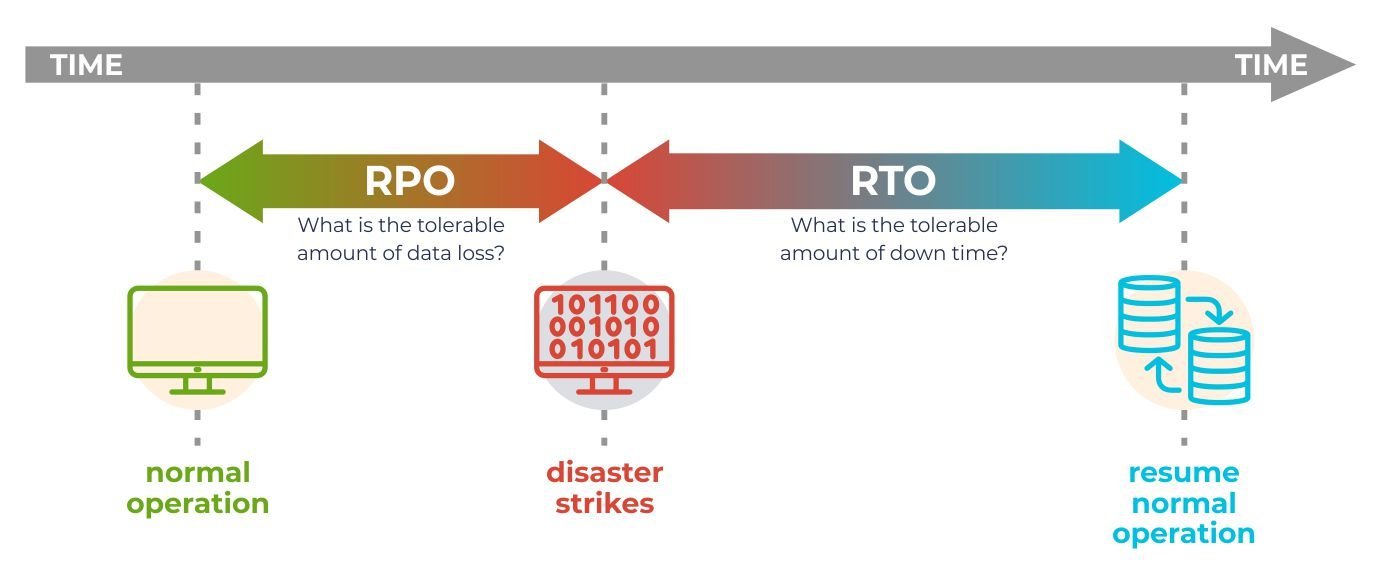
Understanding RTO & RPO
A successful disaster recovery strategy is not just about backups — it’s about how quickly systems can be restored and how much data can be recovered.
Recovery Time Objective (RTO)
RTO defines the maximum acceptable downtime after an incident.
Example: If your RTO is 4 hours, systems should be restored within 4 hours after a failure.
Recovery Point Objective (RPO)
RPO defines the maximum acceptable data loss measured in time.
Example: If your RPO is 1 hour, backups are designed to ensure no more than 1 hour of data is lost.
How We Define RTO & RPO
At Sandstone IT Services, we work with you to:
Identify critical systems
Understand business impact
Align recovery targets with operational needs
RTO and RPO targets are planned objectives, not guarantees, and depend on infrastructure, data size, and external dependencies.